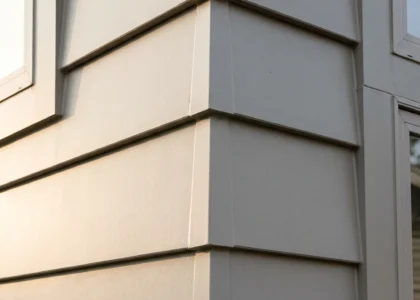
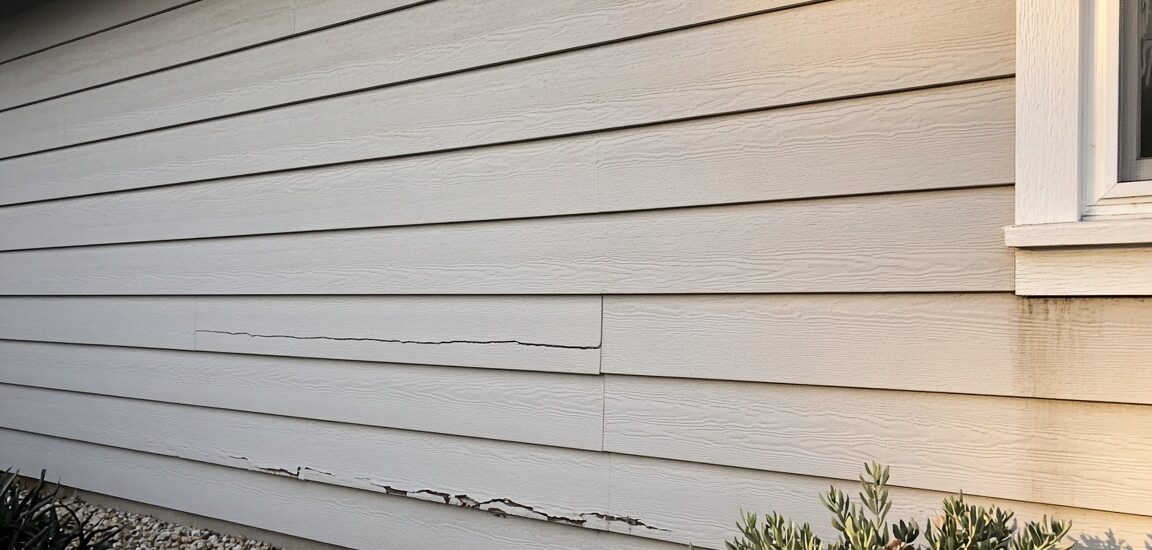
Quick Answer: Siding repair cost in Sacramento starts from national ranges of $200 to $1,100 (HomeGuide, 2026) or $368 to $1,532, with a $932 average (HomeAdvisor and Angi, 2026). Local quotes often sit in the upper part because of California labor. Rot behind the boards and repainting to match are what move the price most.
A cracked board near the ground, paint that keeps flaking off the same corner, a seam that gives when you press on it. Those small failures are usually what send people looking up siding repair cost in Sacramento, and most of them can be fixed without residing the house. The board itself is rarely the big number. The cost comes from what sits behind it and how much of the wall needs paint before the fix disappears.
Below are the national cost ranges with their sources, the things that push a Sacramento quote up or down, when a repair stops making sense, and how permits work across the city, the county, and the cities around them. Vertex Maintenance & Remodeling is licensed under CSLB #1135543. We would rather you walk into any estimate, ours or someone else’s, already knowing what the numbers mean.
Table of Contents
How Much Does Siding Repair Cost in Sacramento?
No one publishes a Sacramento-only price list for siding repair, so the best starting point is the national cost data. HomeGuide’s 2026 figures put an average repair between $200 and $1,100, with a national average near $630. HomeAdvisor and Angi, both updated in 2026, report a typical range of $368 to $1,532 and an average of $932. At the extremes, Angi lists jobs as small as $75 and as large as $16,330 when the damage is widespread or turns into partial replacement.
Labor is where California pulls away from the national middle. HomeAdvisor lists siding labor at $40 to $90 an hour, and HomeGuide lists $40 to $80. Labor costs here run higher than in much of the country, so plan on the upper half of those national ranges and let a written estimate for your wall settle the real figure.
Material matters too. Here is what the two cost guides report per square foot of repair:
| Siding material | Repair cost per sq ft (Angi, 2026) | Repair cost per sq ft (HomeGuide, 2026) |
|---|---|---|
| Vinyl | $2 to $4 | $2 to $4 |
| Fiber cement | $3 to $11 | $4 to $12 |
| Wood | $4 to $13 | $4 to $13 |
| Aluminum | $5 to $7 | $3 to $6 |
| Stucco | $9 to $50 | $8 to $50 |
Small jobs cost more per square foot than big ones. Angi notes that most siding pros charge a minimum trip fee of $100 to $300, so patching a single hole can still come to about $200. If you have two or three problem spots on the same house, it usually pays to have them looked at in one visit.
HomeGuide also breaks costs out by the kind of problem, which is often more useful than a per-foot number when you are staring at one bad spot:
| Problem | Average repair cost (HomeGuide, 2026) |
|---|---|
| Holes | $50 to $800 |
| Cracks | $150 to $1,000 |
| Wood dry rot | $140 to $800 |
| Flashing | $200 to $500 |
| Warped siding | $400 to $1,500 |
| Leaks or water damage | $500 to $4,000 |
What Makes a Siding Repair Cost More?
Most of the spread between a $300 repair and a $3,000 repair comes from a handful of things you can learn about before anyone starts cutting.
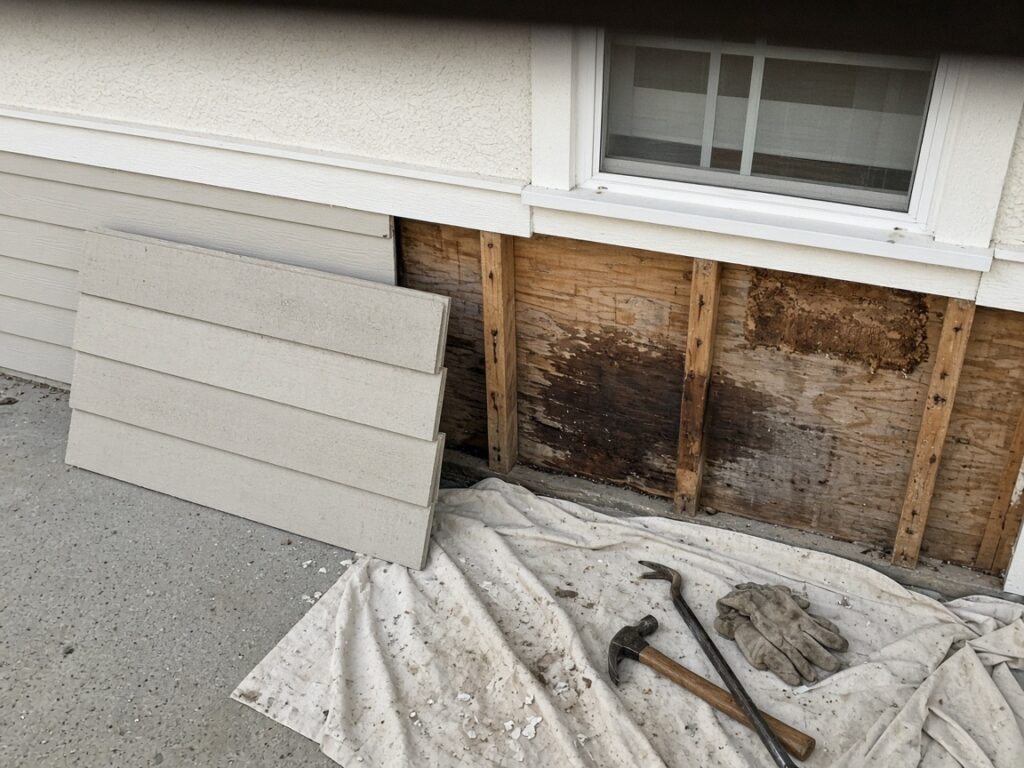
Hidden damage is the biggest one. Angi says to budget $150 to $2,000 for rot or mold cleanup found behind siding, and it lists dry rot removal at $5 to $40 per square foot. A board can look fine from the driveway and still have soft sheathing behind it.
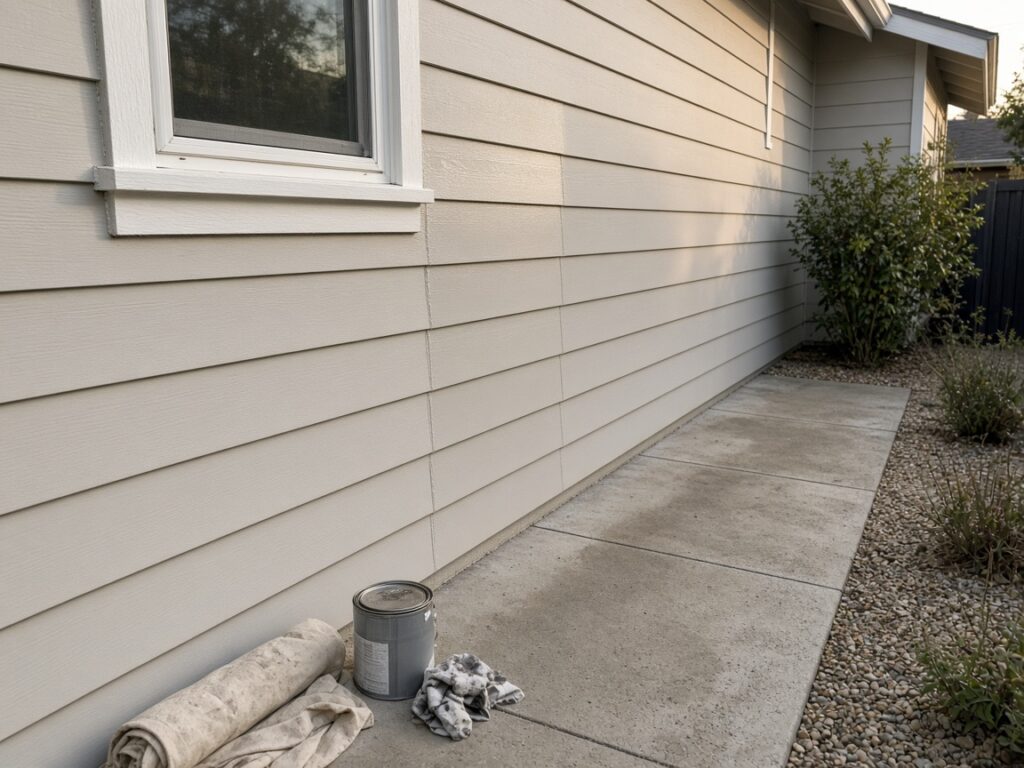
Paint is the second. New boards in an old paint color stand out, especially on a wall that has faded for years in full sun. Angi lists painting at $1.50 to $4 per square foot. Sometimes painting the whole wall, corner to corner, is the only way to make a two-board repair invisible.
Matching the profile can change the job. Older wood lap, hardboard, and some fiber cement patterns are no longer made in the same size or texture. When a match cannot be found, the choice becomes a visible patch or redoing a larger section.
Height adds labor. HomeGuide reports that repairs on upper stories cost 25 to 65 percent more than first-floor work because of ladders, scaffolding, and slower setup.
The age of the house can add a test. HomeGuide notes that homes built before 1978 may contain asbestos in some siding materials, and Angi lists asbestos testing at $230 to $780. If your house is that old and the siding is a cement shingle or an unknown composite, ask about testing before anything is cut or sanded.
Why Does Siding Fail on Sacramento Homes?
Sacramento siding takes two kinds of abuse every year. Long, dry summers bake south and west walls for months. Paint chalks, caulk shrinks away from trim, and the cut ends of boards open up. Then the rain comes back in the fall and winter and finds every gap the summer made.
The damage tends to show up in the same few places. The bottom row of siding near sprinkler heads stays wet all summer. Boards under windows rot when the sill flashing was skipped or has failed. Corner trim and the joints where two boards butt together pull apart first. Walls next to downspouts that dump on the ground, or behind planters and mulch piled against the house, stay damp longer than the rest.
Fixing the board without fixing the water source just schedules the next repair. Redirect the sprinkler, re-caulk the trim joints, and confirm the flashing before the new siding goes on. If the wood under the paint feels soft, read what dry rot repair costs in Sacramento before you budget only for boards.
How Can You Tell If It Is Only the Board or the Wall Behind It?
You can learn a lot with a flat screwdriver and five minutes. Press the tip into the bad board, then into a board a few feet away. If the damaged one is soft and the other is hard, the rot is real. If the tip sinks past the board itself, moisture has likely reached the sheathing.
A few other signs point past the surface:
- Paint that bubbles or peels in one patch while the rest of the wall holds.
- Swelling at the ends of fiber cement or hardboard boards, where they butt into each other or into trim.
- Dark staining that runs down from a window corner.
- A musty smell inside a closet or room on the other side of the wall.
- Boards that move or bow when you push on them.
None of these prove the wall is rotten, but each one is a reason to have someone open a small section during the estimate instead of guessing. When rot has spread into the framing or the trim around it, our dry rot repair in Sacramento work covers that part of the job.
Should You Repair or Replace Your Siding?
Repair makes sense when the damage stays on a few boards or one wall and the rest of the siding still has years left. HomeAdvisor’s rule of thumb is to think about replacement once repairs pass $2,000 or about half the cost of new siding. For comparison, HomeAdvisor puts new siding at $5,600 to $17,600, and HomeGuide puts an entire house at $5,000 to $12,000.
Replacement is the better call when damage shows on several walls, leaks keep coming back after earlier repairs, or the profile is no longer made and patches would look worse than the problem. Old siding that has been painted many times and still peels within a season is another sign the boards are near the end.
If you are leaning toward a full job, our siding replacement in Sacramento page explains what that covers, from tear-off to paint. If you are not sure, ask for both numbers on the same estimate. Seeing a repair price next to a replacement price for one wall makes the decision much easier.
Do You Need a Permit for Siding Repair in Sacramento?
Swapping a few boards in kind usually does not need a permit. HomeGuide’s general guidance is that minor, non-structural repairs typically do not, while siding replacement typically does. Work that opens the wall down to the sheathing or framing is more likely to need one.
The bigger local question is who you ask. The City of Sacramento runs its own building division. Unincorporated areas such as Carmichael, Fair Oaks, and Arden-Arcade go through Sacramento County instead, even when the mail says Sacramento. Elk Grove, Citrus Heights, Rancho Cordova, and Folsom each have their own building departments, and Roseville sits in Placer County with its own rules. The address decides the office.
Ask your contractor to confirm which jurisdiction applies and whether your scope needs a permit before work starts. If a permit is required, the fee and the inspection should show up in the written estimate.
Does Homeowners Insurance Pay for Siding Repair?
Sometimes. HomeGuide notes that policies typically cover siding damaged by severe weather or a sudden event such as a fire, and do not cover damage from sun exposure or normal wear. A limb that falls on the wall during a storm is a claim worth calling about. Rot that built up over several winters is usually treated as maintenance.
Some policies also include matching coverage, which can pay to redo a larger area when a repair would leave a visible mismatch. Read your policy or call your agent before the repair, and take dated photos of the damage first.
Can You Repair Siding Yourself?
Vinyl is the friendliest material for a homeowner. A zip tool unhooks the course above, the damaged panel comes out, and a new one snaps in. HomeGuide suggests pulling a matching piece from a hidden wall, such as behind a side gate, when a new panel looks too bright next to faded siding.
Fiber cement is a different job. Cutting it releases silica dust, so it should be cut outdoors with a dust-controlled saw and proper respiratory protection. It is also heavy and brittle at the edges. Wood siding needs to be primed on all sides, including the back and cut ends, before it goes up.
Anything with soft wood behind it is better handled by a licensed contractor. Once the wall is open, you need to judge the sheathing, the house wrap, and the flashing, and those calls are hard to make on a first try.
How Do You Get an Accurate Siding Repair Estimate?
Start with photos. Take a close-up of each damaged area and one wide shot of the whole wall, so the person quoting can see the height, the access, and how much paint is involved. If you know the siding material or roughly when the house was last painted, include that too.
During the visit, the contractor should probe the soft spots and check the trim, flashing, and sprinklers nearby. Counting boards is not enough. A good estimate is written and itemized. It should separate boards, any sheathing or framing allowance, paint, and disposal, and it should say how added rot will be priced if more turns up once the wall is open.
The estimate is also where the schedule belongs. How long a repair takes depends on the size of the house, the siding material, and what is behind it, so we put the timeline in writing once we have seen the wall.
Before you sign with anyone, look up their license at cslb.ca.gov. Vertex Maintenance & Remodeling holds CA #1135543 with B General Building and C13 Fencing classifications.
What Else Do Homeowners Ask About Siding Repair?
How long does a siding repair take?
It depends on the size of the house, the siding material, and whether there is hidden damage behind the boards. A contractor should give you the schedule in the written estimate after seeing the wall.
Can you replace just one siding board?
Yes. A single cracked or rotted board can usually be cut out and replaced. The harder part is matching the profile and paint so the new board does not stand out, which is why a small repair sometimes includes painting the whole wall.
Will new siding match my old siding?
Often, but not always. Some older wood, hardboard, and fiber cement profiles are no longer made. If an exact match is not available, the options are a close match on a less visible wall, moving original boards from a hidden area, or redoing a larger section.
Is siding repair covered by homeowners insurance?
Sudden damage from a storm or a fallen limb is often covered. Rot, sun damage, and normal wear usually are not. Check your policy and take photos before any repair starts.
How do I check a siding contractor’s license in California?
Search the contractor’s name or license number at cslb.ca.gov, the Contractors State License Board site. Vertex Maintenance & Remodeling is licensed under CSLB #1135543.
Bottom Line: Should You Fix It Now or Wait?
Fix it before the rain if the bad spot is at a window corner, the bottom course near a sprinkler, or anywhere a screwdriver sinks in. Those are the repairs that grow from a few boards into a sheathing job when they sit through another winter. A single dent or a hairline crack on a dry, shaded wall can wait for a planned paint cycle, as long as you seal it and keep an eye on it.
Whichever group you are in, treat the national ranges above as a starting point. A written estimate based on your actual wall is the number that counts.
If you have a cracked board or a soft spot you are unsure about, we can come take a look, probe it, and tell you whether it is a board or a wall. You get a written estimate with the scope and the schedule. Call or text (916) 389-1796, Monday through Friday, 8 to 6.
Sources
Angi, How Much Does It Cost to Repair Siding, updated October 2026: average repair cost, repair costs by type and material, trip fees, hidden damage allowance, dry rot removal, painting, and asbestos testing.
HomeAdvisor, How Much Does Siding Repair Cost, updated June 2026: typical range and average, labor rates, repair vs. replacement guidance, and new siding cost.
HomeGuide, How Much Does It Cost to Repair Siding, February 2026: average repair costs by material and by problem, upper-story labor, permits, insurance, and DIY repair tips.
City of Sacramento Building Division and Sacramento County Building Permits and Inspection: permit jurisdiction by property address.
Contractors State License Board (cslb.ca.gov): license verification for CA #1135543.