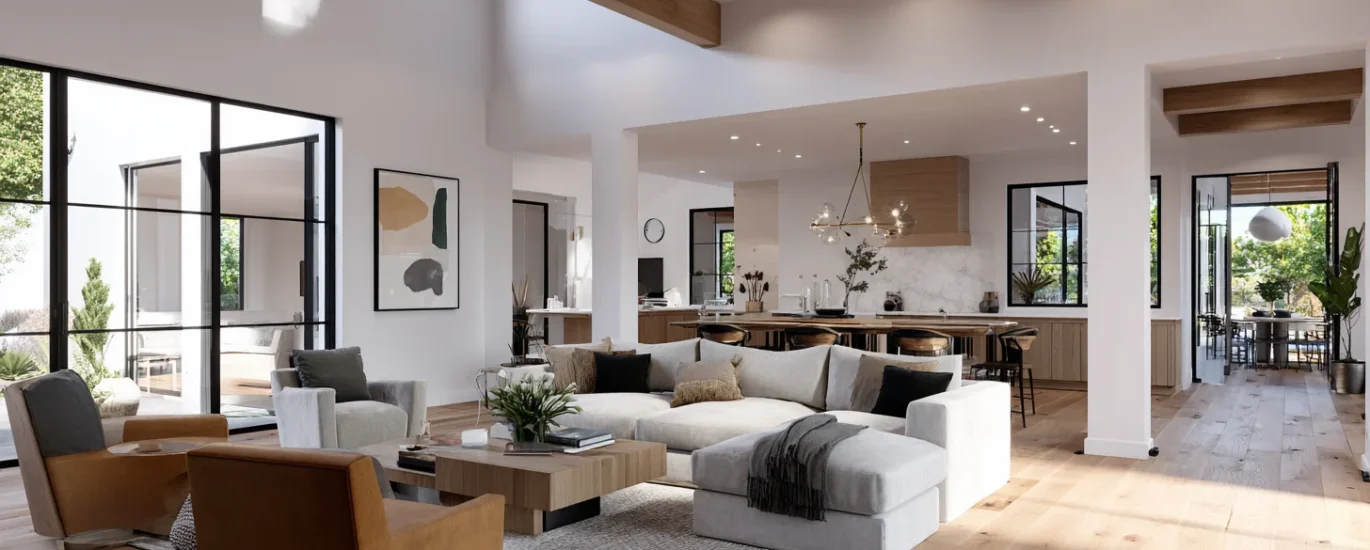
In Sacramento, laminate flooring runs about $3-$8 per square foot installed, while luxury vinyl plank (LVP) runs about $4-$9 per square foot installed. Laminate is the cheaper, harder-scratch-resistant pick for dry rooms; LVP is 100% waterproof and better for kitchens, baths, and homes with pets. A typical 1,200-1,800 sq ft Sacramento home lands around $7,000-$16,000 for LVP throughout.
Choosing between LVP vs laminate flooring in Sacramento usually comes down to two things: your budget and your water risk. Both give you a convincing wood look for a fraction of hardwood pricing, and both install quickly over a properly prepped subfloor. But they behave very differently when a dishwasher leaks, a dog has an accident, or a Sacramento summer swings from bone-dry afternoons to cool nights. This guide breaks down real 2026 cost ranges, what drives the price locally, and how to decide which floor is right for your rooms, your household, and your home’s foundation.
How Much Does LVP vs Laminate Flooring Cost in Sacramento?
Here is the short version, using 2026 installed pricing (material plus labor) for the Sacramento metro. Laminate is consistently the cheapest wood-look option; LVP costs a little more but buys you full waterproofing.
| Flooring type | Material only (per sq ft) | Labor (per sq ft) | Installed total (per sq ft) |
|---|---|---|---|
| Laminate | $1.20-$4.50 | $2.00-$4.00 | $3-$8 |
| Luxury Vinyl Plank (LVP) | $2-$6 (premium SPC $6-$8) | $2-$5 | $4-$9 |
Sacramento installation pricing generally sits 10-15% above national averages because of higher metro labor rates, but it runs well below the Bay Area, where the same job often costs 30-40% more (ProFlow Home Services, Sac Valley Contractors, 2026). For a whole-home project, most Sacramento homeowners land between $7,500 and $25,000 across all materials, with LVP throughout a 1,200-1,800 sq ft single-story typically landing at $7,000-$16,000 once demo and subfloor prep are included.
What Is the Real Difference Between LVP and Laminate?
They look similar in the store, but the core is what separates them, and the core is what fails.
Laminate
Laminate is built on a high-density fiberboard (HDF) core, which is a compressed wood product, topped with a photo-realistic image layer and a tough aluminum-oxide wear coat. That wear layer makes laminate the champion of scratch resistance, and it often shows sharper, more realistic wood grain than vinyl. The catch: the wood-based core swells if standing water reaches a seam, and a swollen laminate plank cannot be repaired, only replaced. Even most “waterproof” laminates in 2026 only promise to hold water for 24-72 hours (America’s Floor Source; Leicester Flooring, 2026).
Luxury Vinyl Plank (LVP)
LVP is 100% plastic-based, usually with a rigid stone-polymer (SPC) core, which makes it fully waterproof through the entire plank, not just the surface. That is why it is the safer choice for kitchens, bathrooms, laundry rooms, basements, and homes with pets. Its sealed surface also gives odor nowhere to hide when spills are cleaned promptly. The trade-off is that standard LVP can dent or scratch more easily than laminate, though a 20-mil or thicker wear layer closes that gap and rivals laminate for claw resistance (Floors Revolution; The Rouse Homes, 2026).
What Affects Flooring Cost in Sacramento?
Two identical-size homes can get very different quotes. After installing floors across Sacramento and the surrounding area, these are the factors that move the number most.
- Wear-layer thickness (LVP) and AC rating (laminate). A 6-mil builder-grade LVP and a 20-mil premium LVP look alike but are not. Thicker wear layers and higher AC ratings cost more up front and last far longer.
- Subfloor condition. This is the big one in Sacramento. Many homes from the 1950s-1980s have settled, uneven, or moisture-affected subfloors that must be leveled or repaired before a single plank goes down. Skipping prep is the number-one cause of gaps, clicking, and premature wear.
- Demolition and disposal. Tearing out old tile, glued-down vinyl, or carpet and hauling it away adds labor.
- Room count and layout. Lots of small rooms, closets, stairs, and transitions mean more cutting and more labor per square foot than one open great room.
- Underlayment and moisture barriers. Slab-on-grade homes often need a moisture barrier; raised-foundation homes may need a different underlayment for sound and comfort.
If you want a clear, itemized breakdown for your specific rooms, our Sacramento flooring installation team can walk the space and separate material cost from prep and labor so there are no surprises.
Why Does Sacramento’s Climate and Housing Stock Matter for Flooring?
Local conditions change which floor makes sense, and they are a big reason generic online advice can steer you wrong.
Dry heat and daily temperature swings. Sacramento summers are hot and very dry, and temperatures can swing sharply between afternoon and night. Wood-core laminate expands and contracts more with those humidity and temperature shifts, which is why proper acclimation (letting the flooring sit in the home for 48-72 hours before install) and correct expansion gaps at the walls matter so much here. Rigid-core LVP is far more dimensionally stable in these conditions.
Older homes and uneven subfloors. A large share of Sacramento’s housing was built between the 1950s and 1980s. Decades of settling leave subfloors that are rarely perfectly flat, and both LVP and laminate are floating floors that telegraph every dip and hump if the base is not corrected first. Budgeting for leveling is often the difference between a floor that feels solid and one that clicks underfoot.
| Sacramento factor | Impact on your floor | Better-suited option |
|---|---|---|
| Hot, dry summers and swings | More expansion/contraction; gapping risk | LVP (more stable); laminate needs careful acclimation |
| 1950s-1980s homes, settled subfloors | Uneven base causes flex and noise | Either, with proper leveling and prep |
| Kitchens, baths, laundry, pets | Standing-water and spill exposure | LVP (100% waterproof) |
| Bedrooms, living rooms, offices | Dry, lower-spill areas | Laminate (cheaper, harder wear coat) |
A quick note on permits and licensing. Standard like-for-like flooring replacement in Sacramento typically does not require a building permit, though related structural or subfloor repair can. Either way, always confirm your contractor is licensed. You can verify any California contractor’s license for free at the CSLB website (cslb.ca.gov). Vertex Maintenance is licensed under CSLB #1135543. If your project is in West Sacramento, note that it falls under Yolo County rather than Sacramento County, so any permitted work goes through a different building department.
Which Flooring Lasts Longer, LVP or Laminate?
Lifespan is close, and quality matters more than category.
- Laminate: typically 15-20 years with reasonable care.
- Standard LVP: about 10-15 years with pads and rugs.
- Premium LVP (20-mil wear layer): 15-25 years in a typical home.
The takeaway: a well-made LVP with a thick wear layer can match or outlast laminate, while a cheap version of either will wear out fast. In a busy Sacramento household, the wear layer and core quality predict longevity better than the label on the box (Flooring Cost Pro, 2026).
Is LVP or Laminate the Better Choice for Your Sacramento Home?
Here is the honest framework we give homeowners. Neither floor is “best” everywhere, so match the material to the room.
Choose LVP when
- You are flooring a kitchen, bathroom, laundry room, or basement.
- You have pets or young kids and spills happen often.
- You want one waterproof floor running continuously through wet and dry rooms.
- Long-term moisture protection matters more than saving a dollar per square foot.
Choose laminate when
- You are flooring bedrooms, living rooms, hallways, or a home office.
- Scratch resistance is your top worry (large dogs, heavy furniture).
- You want the sharpest, most realistic wood grain for the money.
- Budget is the deciding factor and the rooms stay dry.
Many Sacramento homes do best with a mix: LVP through the kitchen, entry, and baths, laminate in the bedrooms. A good installer will help you plan transitions so the two look intentional rather than patched together.
How Can Sacramento Homeowners Get the Best Value on New Floors?
After completing flooring projects across Sacramento and the Bay Area, these are the moves that stretch a flooring budget the furthest.
- Spend on the wear layer, not the fanciest look. A 20-mil LVP or higher-AC laminate costs a little more and saves a full replacement later.
- Never skip subfloor prep. Leveling and moisture control are the cheapest insurance you can buy against gaps and noise.
- Buy 7-10% extra material. It covers cuts, waste, and future repairs from the same dye lot.
- Get an itemized quote. Insist that material, demo, prep, and labor are listed separately so you can compare bids honestly.
- Acclimate the flooring. Especially with laminate in Sacramento’s dry climate, letting planks adjust in the home prevents post-install gapping.
- Verify the license. Confirm the contractor at cslb.ca.gov before you sign anything.
Bottom Line: LVP vs Laminate Flooring Cost in Sacramento
For most Sacramento homeowners, laminate ($3-$8 per square foot installed) is the budget pick for dry rooms and delivers excellent scratch resistance, while LVP ($4-$9 per square foot installed) is worth the small premium anywhere water is a risk. The single most important cost is not the material at all, it is the subfloor prep underneath, especially in the region’s older homes. Get that right, buy a decent wear layer, and either floor will look great and last for years.
Ready for real numbers on your rooms? Our team installs hardwood, tile, laminate, and luxury vinyl plank with proper prep and clean finishes. Request a free flooring estimate and we will walk your space, recommend the right material room by room, and give you an itemized quote with no pressure. You can also learn more about our flooring installation services in Sacramento.