
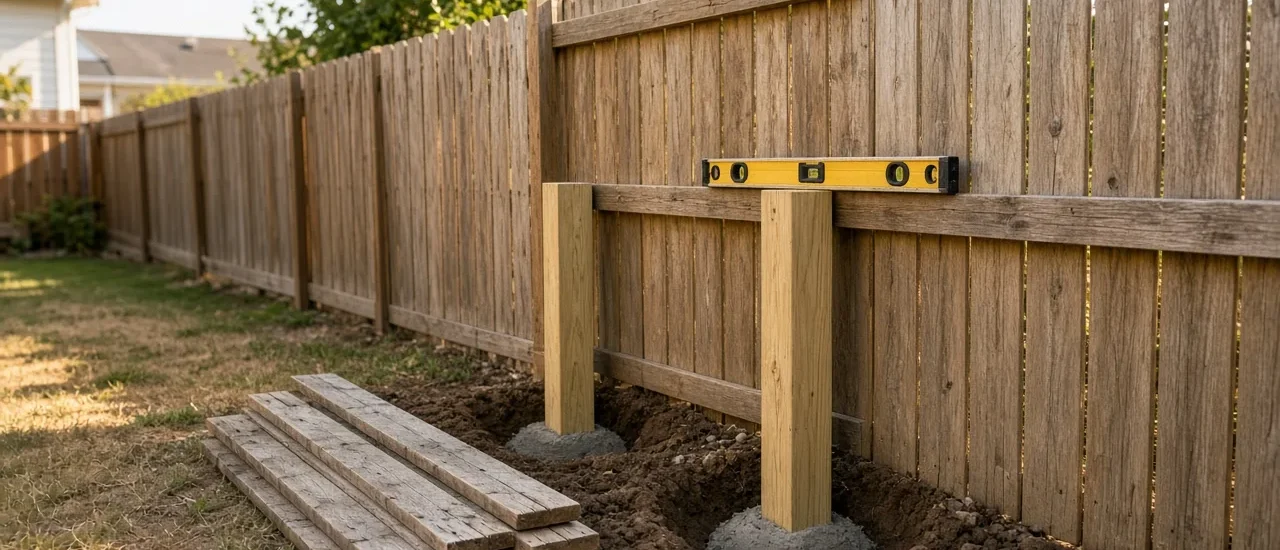
Quick Answer: Fence repair in Sacramento is the right call when posts are still solid and only panels, rails, or a short section failed. Soft post bases, heaved concrete, or a whole run that waves usually means section or full replacement. City of Sacramento fences not over 7 feet are generally building-permit exempt, but Planning height rules still apply. Vertex holds C13 Fencing under CA #1135543.
Table of Contents
Fence repair sacramento searches usually start the same way: a panel that leans after a windy week, a gate that drags, or a dog that found a soft board at the bottom rail. The question is rarely “can someone hang a new board.” It is whether the posts still have life, or whether you are about to pay twice – once for a cosmetic patch and again when the line fails next season.
This guide walks through how we decide repair versus replacement on Sacramento, West Sacramento, Roseville, Folsom, and Elk Grove lots. You will see what to probe on a post base, how city versus county height rules affect a rebuild, what C13 fencing means on a bid, and when a gate problem is really a fence-line problem. Vertex Maintenance & Remodeling holds CA #1135543 with B General Building and C13 Fencing.
When Is Fence Repair Enough in Sacramento?
Repair is enough when the failure is limited and the structure under it is sound. That usually means one or more of these:
- A few cracked or warped boards with posts that do not rock when you push mid-height
- A bottom rail that softened from splash while the post still probes solid below grade
- Hardware that rusted or pulled, but the post and rail joinery still holds square
- One short section hit by a vehicle or tree limb while neighboring bays stayed true
On those jobs we cut out the failed boards or rails, match material as close as stock allows, and reset fasteners so the bay does not rack. You keep the rest of the run. You also keep the original post spacing, which matters when the line already sits on the property line you and your neighbor agreed to years ago.
Repair stops being enough when more than a short stretch of posts fail the rock test, when concrete footings have heaved out of plumb, or when every other bay shows the same soft base. At that point a pretty panel on a bad post is a warranty claim waiting to happen.
What Causes Sacramento Fences to Lean or Soften?
Valley clay is the first driver. Posts set shallow or packed without a drain path move as the soil swells in winter and shrinks through summer heat. The line starts waving long before boards look old.
Irrigation is the second. A spray head that clips the bottom rail three times a week keeps wood wet during months when rain is not falling. Soft bottoms and post-base rot show up on the wet side of the yard first.
Wind load on tall privacy panels is the third. A six-foot solid run acts like a sail. If posts were undersized or set light, the first storm season racks the bays. Vinyl and metal lines fail differently – racked racks, pulled brackets, or posts that spun in undersized holes – but the root cause is still the footing, not the panel brand.
Gate openings concentrate stress. Every swing loads the hinge post. If that post was set like a mid-run post, it leans first, then the leaf binds, then people blame the gate hardware. Often the fix starts in the ground.
How Do You Tell a Bad Panel From a Bad Post?
Stand at the end of the run and sight down the tops. A wave that follows every post usually means the posts moved. A single bay that kicks out while neighbors stay true often means that bay took an impact or the rail failed.
Push the fence at mid-height next to a post. Sound posts barely move. Soft posts rock in the hole or the concrete jacket moves with them. Probe the post base with a screwdriver where soil and splash meet the wood. Sound wood stops the tip. Soft wood lets it sink.
Look at fastener patterns. Boards pulling through with posts still plumb point to board failure. Posts out of plumb with fresh-looking boards point to footing failure. Both can show up on the same run – we call that out on the walk-through so you are not surprised mid-job.
What Does Fence Repair vs Replacement Usually Involve?
A typical repair visit covers layout confirmation, selective demo of failed boards or rails, material match, refastening, and cleanup of spoils. Labor time scales with how many bays you open and whether posts stay. Matching older cedar-style boards or a discontinued vinyl profile can take longer than the cut itself.
Section replacement pulls failed posts, digs to undisturbed soil, sets new posts with drainage and concrete, then hangs new panels. Full run replacement does that for the entire line. Gate openings get framed last so the leaf matches the finished opening.
We do not quote invented per-foot prices in this article. What moves cost on real bids is post count, material choice, access down a side yard, HOA material rules, and whether underground irrigation or utilities sit on the dig line. Photos of leaning posts and close-ups of post bases help more than a wide yard shot alone.
When the right answer is a new run rather than a patch, that work lives on our fence installation in Sacramento page – materials, post setting, and how we stage a full install.
Do You Need a Permit for Fence Repair in Sacramento?
Inside City of Sacramento limits, fences not over 7 feet high are generally exempt from a building permit. Routine repair on an existing legal fence usually stays in that same lane. That does not mean height and placement are unregulated. Planning still applies City Code Chapter 17.620 wall, fence, and gate rules – front-yard height, driveway visibility, and design standards can still matter even when the building desk does not issue a card.
Unincorporated Sacramento County uses county zoning and building desks instead. Height triggers and when a permit kicks in are not identical to the city. Roseville, Folsom, Elk Grove, and West Sacramento each run their own codes. If a repair turns into a taller rebuild, a masonry wall, a pool barrier, or a new automatic gate, review can expand fast. We build to what your jurisdiction and association approved.
HOA architectural review is separate. Many planned communities want design approval before you change material, color, or height – even when the city building desk stays quiet. Bring those notes to the estimate.
What Should You Look for in a Fence Repair Contractor?
Start with the license. California fencing work belongs under a C13 Fencing classification (or a properly scoped B General Building project). Vertex holds both under CA #1135543. Verify any bidder on the CSLB Check a License page before you put a deposit down.
Ask how they decide repair versus replace. A contractor who only sells full runs will find a reason to tear out sound posts. A contractor who only patches will hang new boards on soft footings. You want the walk-through to name both options in plain language.
Ask about post depth, drainage in clay, and whether failed posts get pulled or “sistered” beside rotten wood. Sistering next to a soft post is how the next lean starts. Ask who handles the gate if the opening is part of the failure – a fence crew and a gate crew that never talk leave you with a leaf that binds on a fresh run.
When Should You Replace Instead of Repair?
Replace when post failure is widespread, when concrete jackets have heaved, when you are changing height or material in a way that makes matching silly, or when repair cost approaches a new section once you price honest post work. Also replace when the line was built wrong the first time – shallow pins, no drainage, undersized posts for a solid privacy sail.
Keep repair when the failure is local, posts probe solid, and matching material is available. A three-bay hit from a delivery truck on an otherwise true run is a classic repair. A 120-foot wave with soft bases every other post is not.
We put that split in writing before demo. If the scope changes after we open a bay and find more rot than the probe showed, we stop and talk before continuing.
How Do Gates Change a Fence Repair Job?
Gates concentrate load on the hinge post and latch post. A leaf that drags is often a leaning hinge post, not a bad hinge. Fixing only the hardware on a moving post wastes the service call.
If the gate operator, keypad, or commercial hardware is part of the failure, that opening may need door and gate repair in Sacramento coordinated with the fence line so the run and the leaf are not fighting each other. Residential swing gates without operators usually stay with the fence crew once the posts are true.
Measure the opening after posts are set, not before. Hanging a gate on temporary bracing is how you get a leaf that binds the week the concrete cures.
Bottom Line: Who Should Call and Who Can Wait
Call soon if posts rock, if a gate will not latch, if a section creates an escape for pets or kids, or if soft wood at the base is spreading bay to bay. Waiting through another wet season on soft posts usually turns a section job into a longer run.
You can wait a bit if one board cracked, posts are solid, and the line still stands plumb – but schedule the repair before irrigation season cooks the next bottom rail. If you are unsure, a walk-through with photos of post bases answers it faster than guessing from the curb.
Vertex Maintenance & Remodeling repairs and replaces fences across Sacramento metro under CA #1135543 (B + C13). Call or text (916) 389-1796, or request a free estimate.
Sources: City of Sacramento Planning / City Code Chapter 17.620 wall, fence, and gate standards; City of Sacramento building permit exemptions for fences not over 7 feet; California Contractors State License Board C13 Fencing classification descriptions; Vertex Maintenance field practice across Sacramento, West Sacramento, Roseville, Folsom, and Elk Grove (2024-2026).