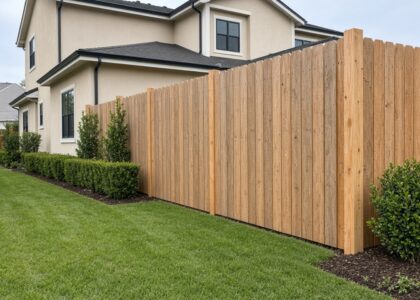
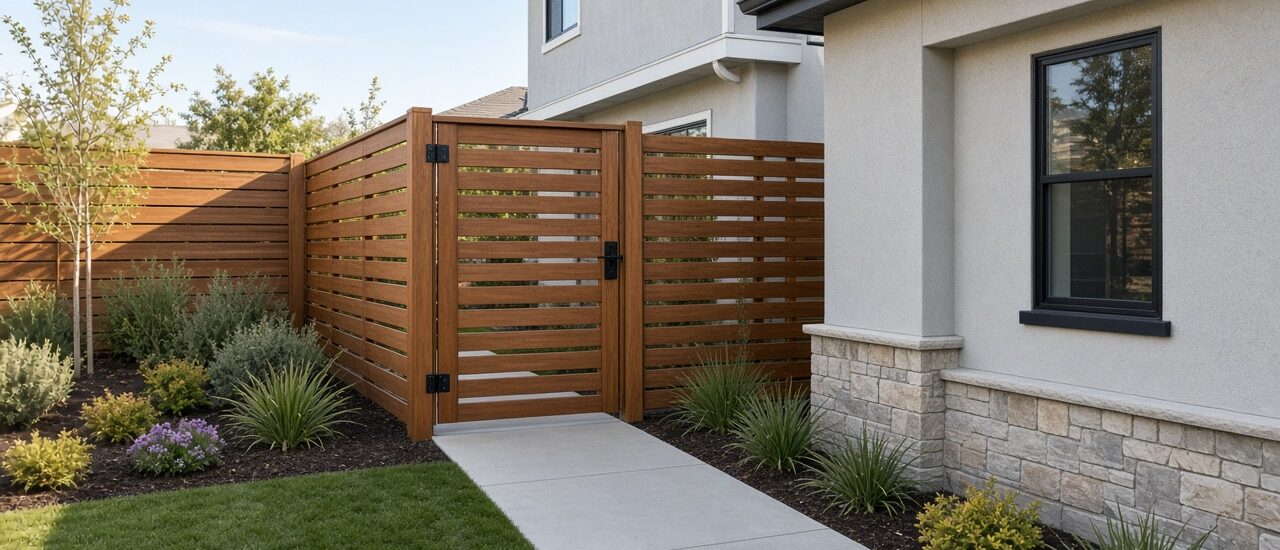
Quick Answer: Most sagging or dragging gates in Sacramento come down to the hardware or the post. Loose hinge screws and a frame that has racked out of square are usually a same-day fix, and often one you can do yourself. A hinge post that has leaned or rotted at the ground has to be reset or replaced, and that is where gate repair turns into fence work.
Gate repair in Sacramento picks up every fall for the same reason. A wood gate that dried out and shrank all summer starts swelling once the rain comes back, the post settles into wet clay, and the latch that barely caught in September stops catching by December. We see it on backyard gates, side-yard gates and the shared gates at small apartment buildings.
The good news is that most of these gates don’t need to be replaced. They need someone to figure out which part actually moved. This guide walks through how to tell, what you can fix with a drill and a brace kit, when the post is the real problem, and what drives the cost. We are a licensed maintenance and remodeling contractor (CSLB #1135543, B General Building and C13 Fencing), and gates are a regular part of our week.
Why do gates in Sacramento sag, drag or stop latching?
A gate is a heavy lever hanging off one post. Every time it swings, it pulls the top hinge away from that post and pushes the bottom hinge into it. Over a few years, that load works screws loose, stretches the frame out of square, and leans the post toward the opening.
Sacramento adds its own pressure on top of that:
- Much of the valley sits on clay soil that swells when it is wet and shrinks when it dries. A post set in that soil can shift a little each season, and a small lean at the ground becomes a big drop at the latch.
- Most of our rain falls between November and March. Wood gates take on water, swell and get heavier just as the soil around the post softens.
- Long, hot summers dry wood out, open up joints and loosen fasteners that were tight in spring.
- Sprinklers aimed at the fence line keep the base of the post wet, which speeds up rot right where the post meets the ground.
Gate width matters too. The wider and heavier the gate, the harder it pulls on the hinge post. A 3-foot pedestrian gate on a solid post can go years without trouble. A wide double gate hung on light posts usually starts sagging much sooner.
How can you tell if it is the hinges, the frame or the post?
Five minutes with a level and a tape measure will usually tell you which problem you have. Close the gate, then try these in order.
- Lift the latch side of the gate. If it lines up and latches when you lift it, the gate itself has dropped. The cause is hinge hardware, the frame, or the post.
- Put a level on the hinge post, on the face and on the side. A post that is out of plumb, or one that moves when you push on it, is the problem, no matter what the hinges look like.
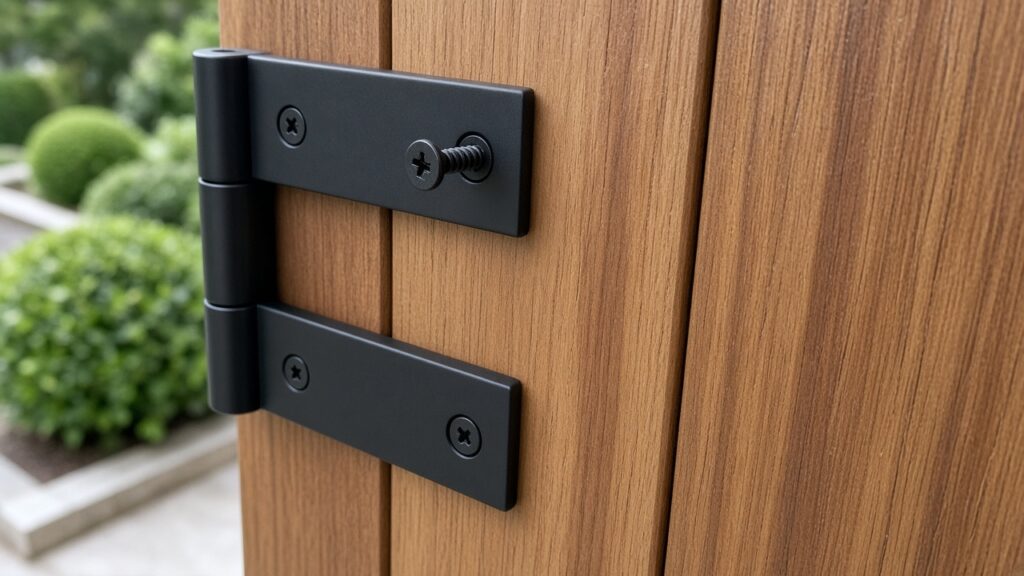
- Check the hinge screws. If they spin, pull out, or the wood around them is split, the hinge has lost its grip.
- Measure the gate frame corner to corner, both ways. If the two diagonals are more than about a quarter inch apart, the frame has racked out of square.
- Look at the bottom of the post at the ground line. Probe it with a screwdriver. Soft, dark wood that the tip sinks into means rot, and a rotted hinge post will not hold a repair for long.
If the post is plumb and solid, you are almost always looking at a hardware or frame fix. If the post leans or is soft, fix that first. Anything you do to the gate itself will sag again.
What can you fix yourself?
A lot of gate repair is well within reach of a homeowner with a drill. The fixes below need basic hardware from any home store and an afternoon.
Re-anchor the hinges
Short screws in old holes are the most common failure we see. Swap them for longer exterior-rated structural screws that reach solid wood in the post. If the old holes are stripped, move the hinge up or down slightly so the new screws bite fresh wood. Heavier strap hinges or a third hinge in the middle help on tall gates.
Square the frame with a brace
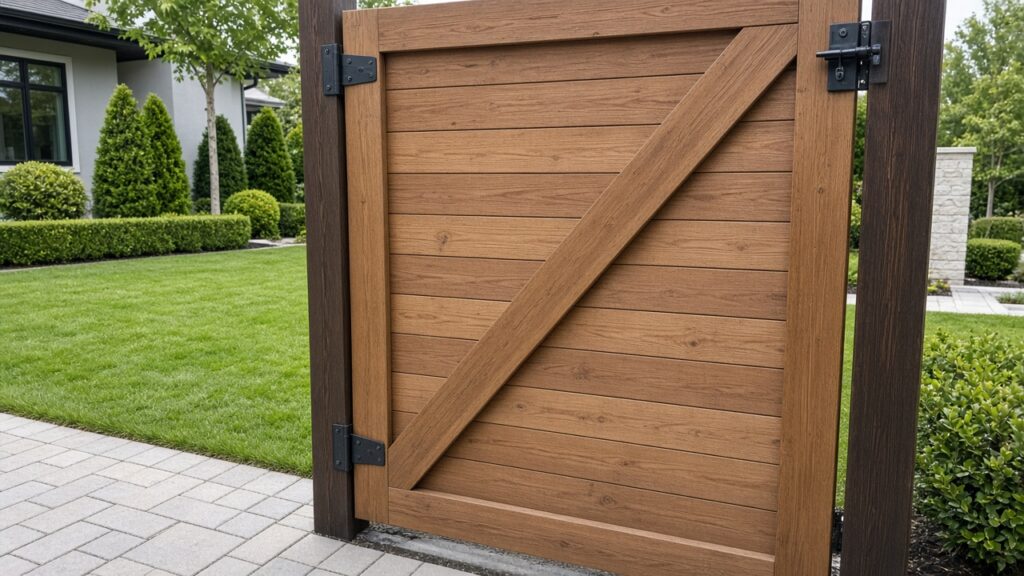
A wood gate should have a diagonal brace that runs from the bottom corner on the hinge side up to the top corner on the latch side. That direction puts the brace in compression and holds the latch corner up. Many sagging gates either have no brace or have it running the wrong way. Where a brace isn’t practical, an anti-sag cable kit with a turnbuckle runs the opposite diagonal and pulls the latch corner back up. Tighten it a little at a time until the gate swings clear.
Adjust the latch and strike
Once the gate hangs true, the latch may no longer meet the strike. Most latches can be moved or shimmed. It is a small job, but do it last, after the hinges and frame are fixed.
Stop the drag
If the bottom rail scrapes pavers or a raised patch of soil, trimming the gate is a last step, not a first one. Fix the sag first. Otherwise you end up with a short gate that still doesn’t latch.
When does a sagging gate need a new post or a new gate?
Some gates are past the brace-and-screws stage. Here is where we usually stop repairing and start replacing parts.
- The hinge post is rotted at the ground line or leans more than a little. The post needs to be reset in concrete or replaced.
- The gate frame itself is rotted, split through the rails, or has pickets pulling off faster than you can refasten them.
- A metal gate has rust eating through at the welds or the hinge tabs.
- The gate is simply too heavy for its posts. Upgrading to a larger post, a steel post, or a lighter gate frame solves it for good instead of re-bracing every year.
When the post goes, the fence panels next to it often need attention too. Our guide to fence repair in Sacramento covers when posts can be saved and when a run should be replaced.
What does gate repair cost in Sacramento?
We don’t publish prices, because gate jobs vary too much for one honest number. The part that failed sets most of the bill. A hinge-and-brace fix is mostly hardware and a short visit. Resetting or replacing a post takes more labor, and a new gate adds materials on top of that. We price your gate in writing after we see it.
What moves a local price up or down:
- Whether the post is set in concrete, since breaking out an old footing takes time.
- Gate material. Wood is usually the simplest. Metal gates may need welding or new hinge hardware made to fit.
- Access. A side-yard gate with a clear path is quicker than one behind landscaping or on a slope.
- Matching. HOA neighborhoods and older fences may need a specific picket, stain or hardware style.
Should you fix a gate before the rainy season?
Yes, if you can. A gate that barely clears in October is likely to drag once the wood swells in the winter. A post that is already a little loose moves more in wet clay. Repairs also go faster when the ground is dry enough to dig and set concrete without fighting mud.
A quick fall check takes ten minutes. Open and close the gate, lift the latch side, put a level on the hinge post, and look at the base of the post. If anything is off, handle it before the first real storm.
What about automatic, commercial and shared gates?
Motorized gates, commercial entries and shared community gates are a different job from a backyard wood gate. They add operators, sensors, safety equipment and often access rules for emergency services. A sag on those gates can also be a worn roller, a bent track or an operator problem rather than a hinge.
For that kind of work, see our gate and door repair service in Sacramento, which covers operators, tracks, commercial doors and live entries.
On shared gates at duplexes, small apartment buildings or HOA-maintained entries, check who is responsible for the repair before you call anyone. It is often the owner or the association, not the tenant.
What should you ask before hiring someone to fix a gate?
- Is the person licensed? Since January 2025, California’s handyperson exemption covers only small jobs under a set dollar limit for labor and materials, with no permit and no employees. Anything bigger needs a licensed contractor, and you can check any license for free on the CSLB website.
- Will they check the post, or only the hinges? A fix that ignores a leaning post will sag again.
- What is included? Hardware, bracing, post work and latch adjustment should be spelled out separately on the estimate.
- Is the gate part of a bigger fence problem? If several posts are failing, a gate-only fix may not be the best money.
For more seasonal upkeep ideas, see our property maintenance tips for Sacramento owners.
Bottom Line
If your gate lines up when you lift the latch side and the post is plumb and solid, start with longer hinge screws and a proper diagonal brace. That fixes most sagging gates for the cost of parts. If the post leans, moves or is soft at the ground, fix the post first, because nothing hung on it will stay true. Homeowners with wood gates should do a quick check in October, before the rain swells the wood and softens the soil.
Need a hand with a gate that won’t stay fixed?
If you have already tightened and braced it and it keeps dropping, or the post is the problem, we can take a look. Call or text (916) 389-1796, Monday through Friday, 8 to 6. A photo of the gate from each side and one of the post at ground level helps us tell you what to expect before we come out.
What else do Sacramento homeowners ask about gate repair?
Why does my gate sag more in winter?
Wood gates absorb water and get heavier in the rainy season, and clay soil around the post softens and lets it lean. Both make the latch side drop. Fixing the hardware and bracing before November helps.
Can I fix a sagging gate without replacing the post?
Yes, if the post is plumb and solid. Longer hinge screws, a diagonal brace or an anti-sag cable kit fix most sagging gates. If the post leans or is rotted at the ground, it needs to be reset or replaced first.
How much does gate repair cost?
It depends on which part failed. Tightening hinges and adding a brace is mostly hardware and a short visit. Resetting or replacing a post, repairing a metal gate, or working around tight access takes more time. We give you a written price after we see the gate.
Which way should a gate brace go?
On a wood gate, the diagonal brace runs from the bottom corner on the hinge side up to the top corner on the latch side. That holds the latch corner up. A cable kit runs the opposite diagonal and works in tension.
Do I need a licensed contractor to repair a gate in California?
Only small jobs under the state’s handyperson dollar limit that need no permit can be done by an unlicensed worker without employees. Larger jobs, post replacements with fence work, or anything needing a permit should go to a licensed contractor. You can verify any license on the CSLB website.
Source: Contractors State License Board, handyperson exemption update (AB 2622, effective January 2025).